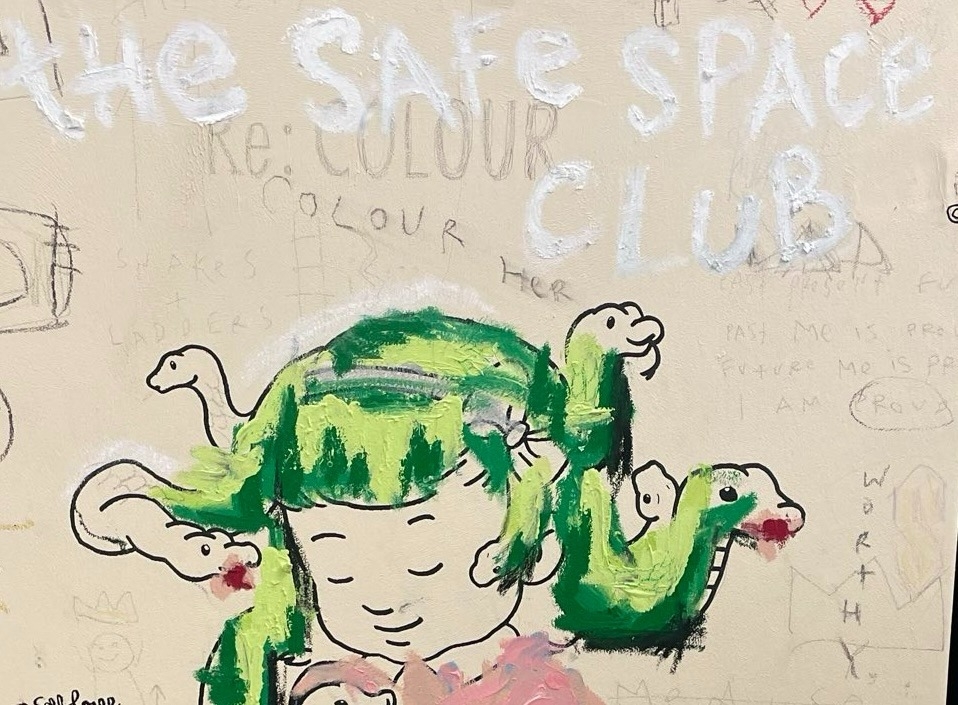
On a warm spring day, we met with the women of the Safe Space Club. They told us about how they created The Safe Space Club for women recovering from sexual trauma, and about their ambition to expand their impact, supported by partners at both local and national levels. At its core, their work addresses the urgent need for low threshold places where women can recover from sexual trauma through connection, shared experience, and everyday practices that restore agency and trust.
This need does not exist in isolation. Sexual violence against women, largely perpetrated by men, is a persistent issue in contemporary society. Its impact does not end with the event itself. Recovery is often long, fragile, and shaped by gaps in care, silence, and social stigma. Many women struggle to find support that feels safe, accessible, and attuned to lived experience, beyond clinical treatment alone. This is where the psychosocial approach of the Safe Space Club addresses a crucial gap in existing care.
The Safe Space Clubhouse, their pilot location in Amsterdam, clearly demonstrated the value of this approach. At the same time, it raised a pressing question. If this kind of care is needed in more places, how can it grow without losing what makes it work, at a time when the societal need for spaces like this is increasingly urgent.